


Hybrid B2B B2C Ecommerce for SAP Business One
Hybrid B2B B2C ecommerce for SAP Business One is a single catalog that serves public buyers and logged-in business accounts, with SAP Business One as the source of truth. Running the two audiences on separate sites splits that catalog, so product content and pricing drift apart and every change has to be made twice. FocusPoint Ecommerce, built exclusively for SAP Business One with zero middleware, shows public buyers MSRP and each logged-in account its own pricing in one catalog.
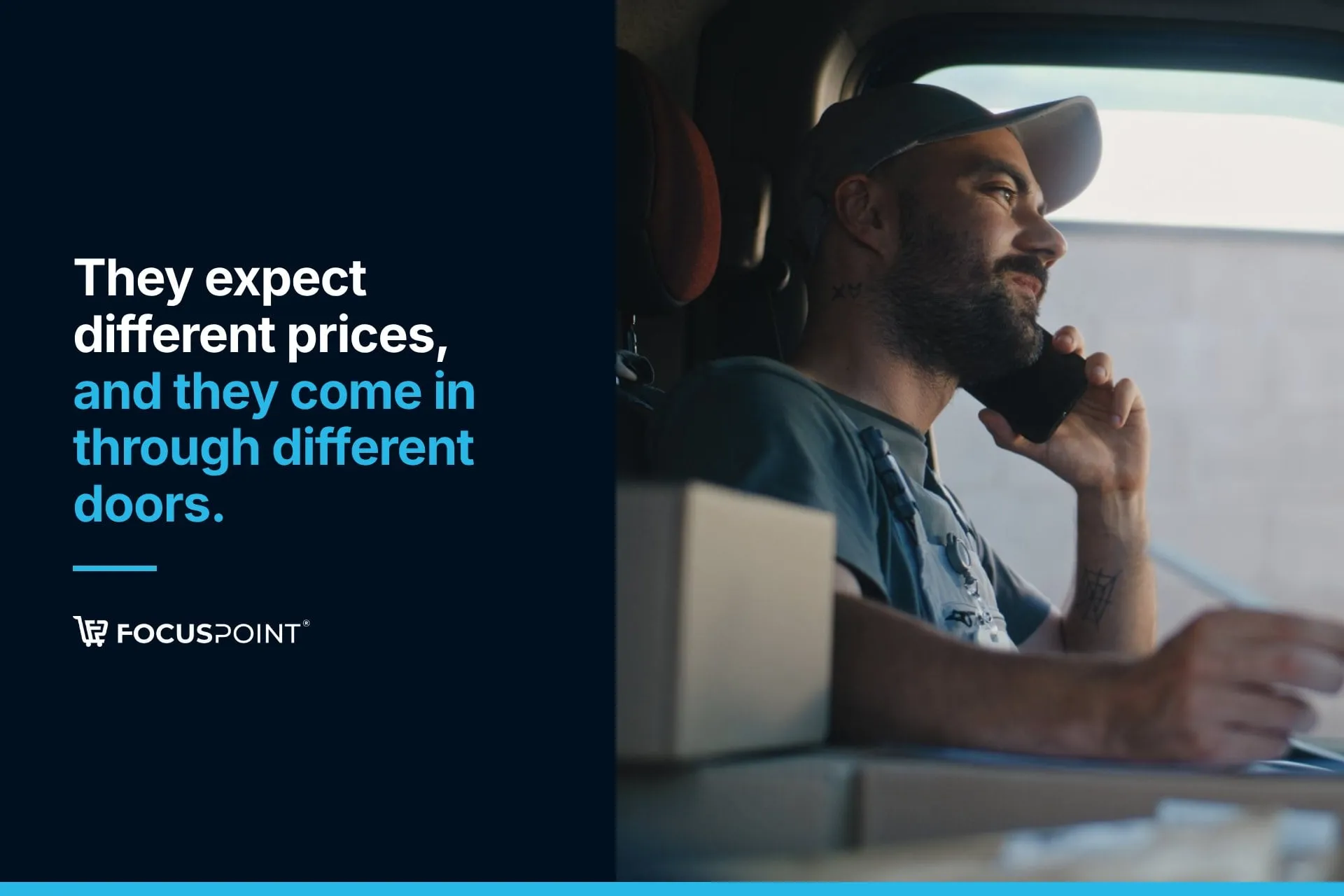
A weekend buyer and a contractor with an account can want the same part. They expect different prices, and they come in through different doors.
Why Hybrid B2B B2C Ecommerce Beats Running Two Sites
A company that sells to trade accounts and to the public has two jobs online. It has to be found by people who’ve never heard of it. And it has to serve the accounts that already buy from it every week.
The instinct is to build for each audience separately: a public site for retail shoppers and a portal for business customers. It looks tidy on a whiteboard. In practice, it means two catalogs to maintain, two sets of product pages to keep accurate, and two places where a description or a price can fall out of step with SAP Business One.
Take a powersports dealership that sells parts and accessories to riders and to independent repair shops. Riders search for a part by name and want to buy it now. The shops want their account pricing and a fast reorder. With two sites, a shop buyer who lands on the public page from a search result sees the retail price and picks up the phone. With one hybrid catalog, that buyer logs in and the same page shows the shop’s own pricing.
What does a business customer see after logging in?
A business customer who logs in to FocusPoint Ecommerce sees its own account pricing on the same product pages a public visitor sees with MSRP. Both buyers are browsing one catalog built for SAP Business One, so the difference comes from who is signed in, not from which website they reached.
What Each Buyer Sees in One SAP Business One Catalog
A hybrid catalog keeps one set of products and changes the buying experience based on who is buying. Here’s how the two audiences compare.
| Public buyer | Logged-in business account | |
|---|---|---|
| How they arrive | Search and browsing | Signing in to their account |
| Price shown | MSRP | Their own account pricing |
| Catalog | The shared product catalog | The same shared product catalog |
| Source of truth | SAP Business One | SAP Business One |
| What they want | To find the product and buy it | To buy at their price without a call |
An electrical wholesaler shows how this plays out. Homeowners and small contractors find a breaker or a light fixture through search and see MSRP and stock before they buy. Electrical contractors with accounts sign in, see the price they’ve agreed to, and order from that same product page. The wholesaler keeps one product record, and both kinds of buyer get a page that fits them.
Public Buyers: The B2C Side Is How New Customers Find You
For a B2B company, the public side of the catalog does more than take retail orders. It gives search engines real product pages to index, with real prices, so a buyer who has never heard of the business can find it.
That matters because some of tomorrow’s trade accounts are today’s one-time buyers. A contractor who picks up a single part at MSRP on a Saturday may be asking about an account by Monday.
Hiding the whole catalog behind a login keeps those buyers out. A hybrid catalog lets the business be found in public without giving up the private pricing its accounts depend on.
Why would a B2B distributor sell to the public at all?
A B2B distributor sells to the public because public product pages are how new buyers find it. With hybrid ecommerce on SAP Business One, public visitors see MSRP and can buy, while account customers keep their own pricing. The retail orders become a second revenue stream, and the public pages give new buyers a way in that a login-only portal can’t offer.
Logged-In Accounts: Ecommerce That Already Knows Your Business
The B2B side is where the hybrid model earns its keep with existing customers. A buyer who signs in shouldn’t have to remember a discount or call to confirm a price. The page should already show it.
That’s the idea behind ecommerce that already knows your business. FocusPoint transforms SAP Business One into an intelligent ecommerce engine that drives revenue growth, automates complex workflows, and delivers personalized buying experiences powered by your own data. For a hybrid seller, personalized means something specific: the same product page, priced for the account that’s looking at it.
Consider an equipment parts distributor whose repair shop customers reorder the same items through the season. When those buyers can sign in and order at their own price, the reorder doesn’t wait on a sales rep. The rep’s time goes to the accounts that actually need a conversation.
Is a hybrid catalog just a B2B portal added to a retail site?
No. A hybrid catalog in FocusPoint Ecommerce is one catalog on one ecommerce engine, built exclusively for SAP Business One with zero middleware. A portal added to a separate retail site is two systems that have to be kept in step. With a single hybrid catalog, public buyers and logged-in accounts see the same products, and the difference is the price each one is shown.
One Source of Truth for B2B and B2C Ecommerce
With FocusPoint Ecommerce, SAP Business One stays the foundation and the single source of truth for both sides of the business. There’s no separate retail system to reconcile and no connector to babysit between a public site and the ERP.
For the people running the business, that’s the practical payoff. When something needs attention, there’s a single source of support instead of a retail platform vendor and an integration partner pointing at each other.
Who manages the catalog when B2B and B2C buyers share it?
A shared catalog for B2B and B2C buyers is one catalog, so the business maintains one set of products instead of two. In FocusPoint Ecommerce, the ecommerce operation runs from Cockpit, the back office, and SAP Business One remains the source of truth behind both audiences. Product updates are made once for public visitors and logged-in accounts alike.
Getting Started With Hybrid Ecommerce on SAP Business One
If your business already sells to trade accounts and to the public, the real decision isn’t whether to serve both online. It’s whether to do it with one catalog or two.
FocusPoint Ecommerce is built exclusively for SAP Business One. Implementation is included at no cost for new customers, there are no transaction fees, and the monthly subscription is based on the modules you use. If you’re weighing one catalog against two, get a quote and talk it through with a team that knows SAP Business One.
Explore what FocusPoint could look like for your business
Request a free, no-obligation quote tailored to your SAP Business One environment, integrations, and B2B workflows.